
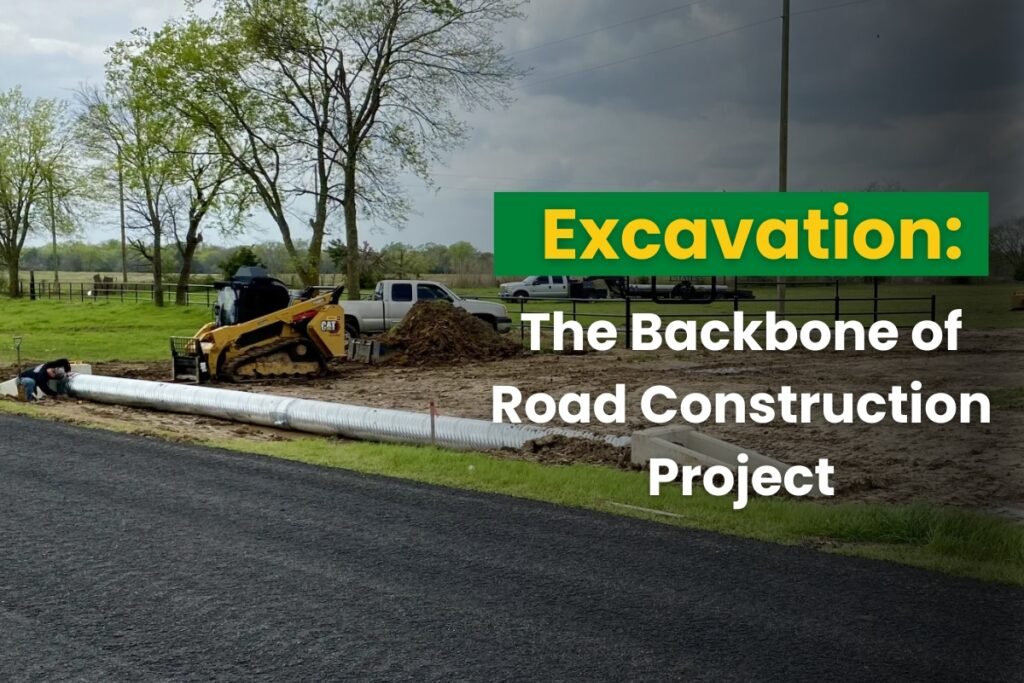
When we zoom past a freshly paved road or navigate smoothly through a newly built highway, it’s easy to admire the surface, the sleek asphalt, crisp lane markings, and thoughtfully placed signage. But beneath that polished facade lies the true unsung hero of every successful road project: excavation. Without it, no road construction service can promise long-term durability, stability, or safety.
Excavation forms the very skeleton of a road project. It’s where groundwork begins, literally and structurally. Before a single slab of asphalt is laid or a base layer is compacted, excavation prepares the earth. It clears the landscape, grades the terrain, and shapes a foundation robust enough to endure the load of countless vehicles and the wrath of ever-changing weather conditions.
What Does Excavation Actually Involve?
At its core, excavation is the precise and strategic removal of soil, rock, and debris to achieve the correct roadbed level. But it’s far more sophisticated than just moving dirt around. This process involves several stages, each rooted in engineering principles and executed with precision:
- Site clearing: Removal of trees, vegetation, large rocks, and unwanted debris that may obstruct construction.
- Stripping topsoil: Taking off the upper, nutrient-rich soil layer to prevent future subsidence and uneven settling.
- Cut and fill operations: Slicing through elevated areas and using that material to fill depressions, creating a level base.
- Trenching: Excavating narrow channels to install essential utilities and water drainage systems.
- Compaction and stabilization: Firming up the subgrade with rollers and, when necessary, chemical stabilizers to ensure it’s load-bearing and weather-resistant.
Each step must be carried out with near-surgical accuracy. A miscalculation in grading or compaction can lead to uneven surfaces, drainage problems, or even road collapse in the long run.
That’s where seasoned professionals like English Excavation step in, bringing years of expertise, high-performance equipment, and a deep understanding of geotechnical behavior to the job site.
Excavation: The Key to Road Longevity
Ever driven down a road that was just built a year ago but already looks like a checkerboard of potholes and patchwork? That’s not just bad luck. More often than not, the problem begins with poor excavation practices.
The layers beneath the surface, namely the subgrade and sub-base, are the silent workhorses that carry the entire structure. If these aren’t properly compacted, leveled, and reinforced, the pavement above will inevitably crack, sink, or erode.
During excavation, engineers analyze the soil composition and moisture content to identify potential issues. For instance, clay-heavy soils retain water and expand, posing a risk to road stability. These soils might need to be replaced, drained, or chemically stabilized. Catching and addressing these challenges early on is crucial, and only excavation gives us that window.
Excavation and Drainage: A Make-or-Break Partnership
Roads don’t just need to support vehicles; they need to handle water intelligently. Rainwater must be directed away quickly and efficiently to prevent pooling, erosion, and dangerous driving conditions.
Excavation enables this through meticulous grading, slope design, and trench carving. It helps create both surface and subsurface drainage systems that manage water movement and preserve the road’s integrity.
Without this attention to detail, even the best pavement will deteriorate rapidly during monsoons or floods. That’s why drainage planning is inseparable from excavation and why any reliable road construction service treats them as one strategic process.
Modern Excavation: Where Technology Meets Earth
Today’s excavation isn’t about brute force alone; it’s about precision and planning. With GPS-guided machinery, drone-assisted surveys, and real-time digital mapping, roadbeds can now be sculpted with surgical accuracy.
These advancements reduce the margin of error, optimize material use, and speed up project timelines, while also minimizing environmental impact. Teams like English Excavation are leading the charge, combining traditional craftsmanship with cutting-edge tech to prepare sites that meet both engineering specs and environmental standards.
The First Step That Defines Every Other
In the grand choreography of road construction, excavation takes the opening bow, and it sets the rhythm for every phase that follows. From planning to paving, everything depends on how well the ground has been prepared.
Overlook excavation, and you’re laying a road of uncertainty. Do it right, and you’re laying the path for decades of smooth, safe travel. Industry veterans know: no matter how beautiful the surface looks, it’s what lies beneath that tells the real story of a road’s strength.